Virginia Tech
Agroecosystem Modeling Lab
Research Overview
The Agroecosystem Modeling Lab investigates how agricultural management and environmental change interact to shape agroecosystem productivity, resilience, and sustainability. Our research integrates process-based agroecosystem modeling, remote sensing, field observations, and AI-driven methods to understand and predict system responses across spatial and temporal scales. Our work spans both (1) fundamental research on coupled carbon, water, and nutrient processes in agroecosystems under environmental stress, and (2) applied research that translates these insights into decision-support tools and management strategies that enhance productivity while addressing challenges such as greenhouse gas emissions, soil degradation, and water pollution.
Agroecosystem Model Development
We develop process-based, AI-driven, and hybrid models to simulate interactions among plants, soils, climate, and management across cropland and grassland systems. Our research primarily focuses on crop and forage productivity, soil carbon and nutrient dynamics, water use, water quality, and greenhouse gas emissions.

Regenerative Agricultural Practices
We investigate how regenerative management practices such as cover cropping, crop rotation, tillage, integrated crop–livestock systems, and regenerative grazing influence productivity, soil health, resource-use efficiency, and environmental outcomes across cropland and grassland systems.

AI-Driven Agroecosystem Prediction
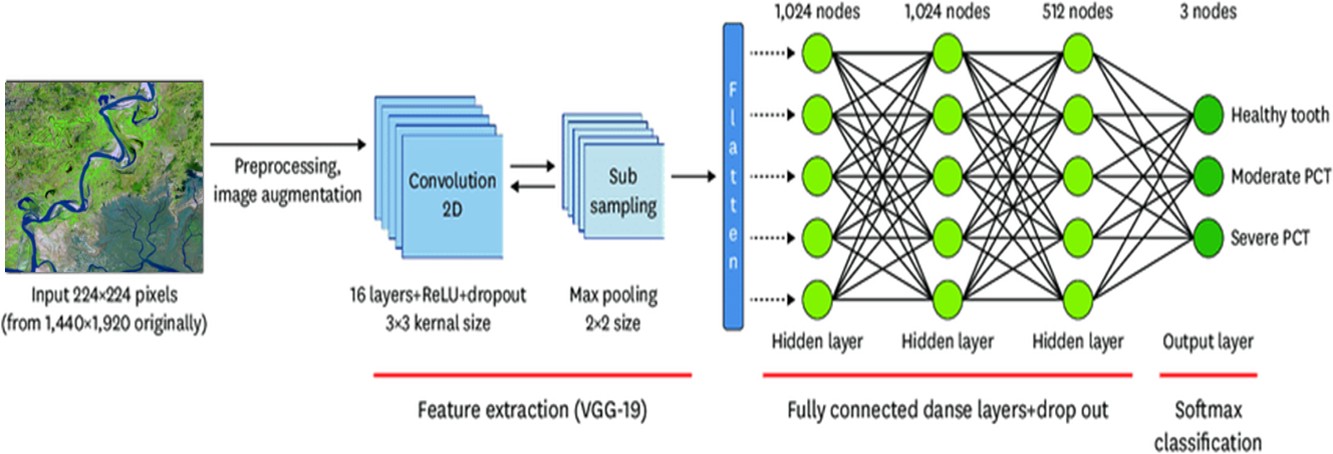
We integrate AI, remote sensing, and multi-source data to predict crop yield, seed quality, soil carbon, and GHG emissions, with an emphasis on developing scalable multimodal and foundation models.
Extreme Weather Impacts
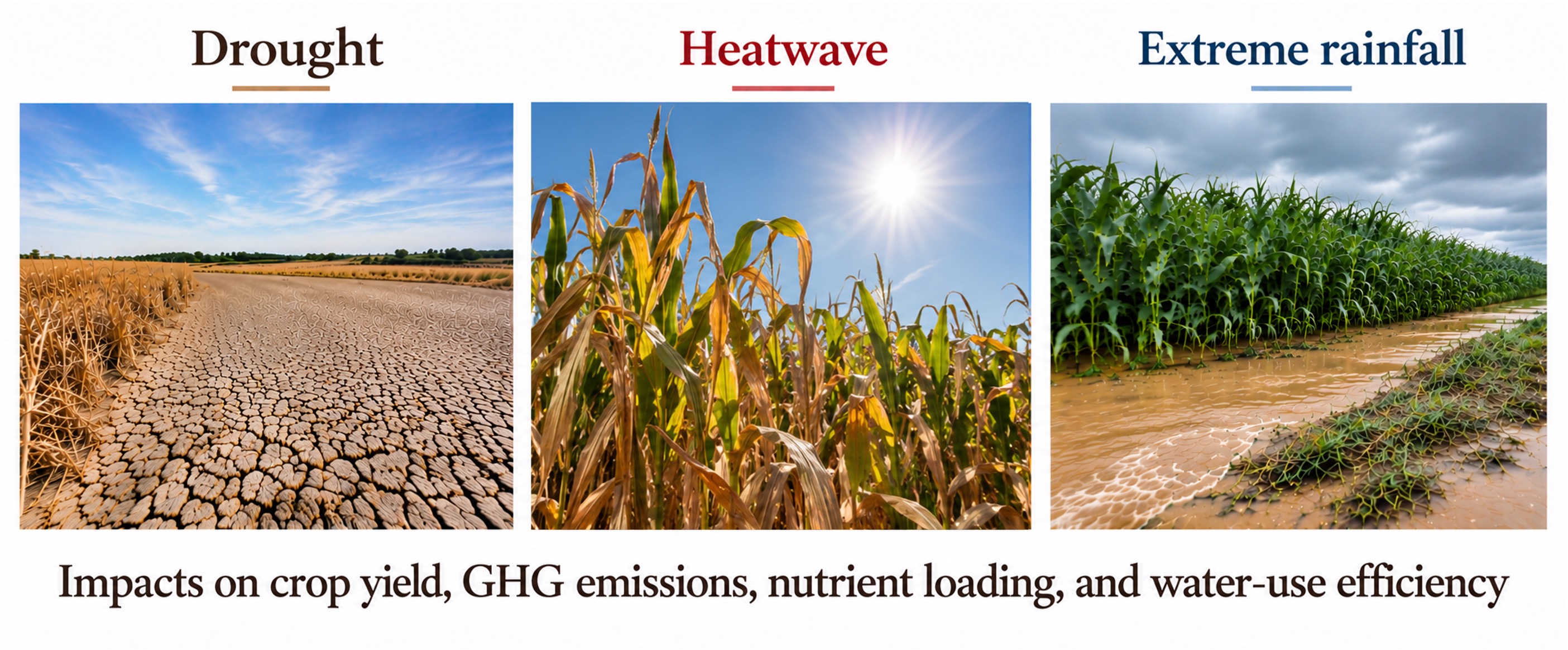
We investigate how climate extremes, including droughts, heatwaves, extreme rainfall, and hydroclimatic whiplash, affect productivity, water quality, and ecosystem functioning. Our research focuses on the mechanisms and environmental controls that govern vulnerability, resistance, and recovery across agroecosystems and natural ecosystems.